
Best Packaging Materials for Shipping Fragile and Bulk Items
Packaging is more than just a box around your product. It is the frontline defence that determines whether your goods arrive at their destination intact or damaged. Choosing the right packaging materials for shipping is crucial, especially when dealing with fragile or bulk items. The quality, durability, and appropriateness of the packaging can significantly impact the safety of the shipment, the reputation of your brand, and the satisfaction of the end customer. Click the link for more information: https://www.dhl.com/discover/en-pk/logistics-advice/import-export-advice/how-to-enhance-packaging-of-fragile-items
The Importance of Choosing the Right Packaging
Every item shipped faces multiple handling stages, environmental exposures, and transportation risks. Fragile items such as glassware, electronics, or ceramics are especially vulnerable to impact, vibration, or compression. On the other hand, bulk items such as industrial equipment or large product quantities pose challenges due to their weight and dimensions.
Proper packaging minimises the risk of breakage, reduces movement within the container, and ensures compliance with carrier and customs regulations. It also reflects professionalism and brand care, particularly for businesses involved in e-commerce or international trade.
Materials Suited for Fragile Shipments
Fragile items require not only cushioning but also strong outer protection. Several packaging materials are designed specifically to safeguard delicate products during transit.
Corrugated cardboard boxes are a go-to solution for most shipments, but for fragile items, double- or triple-walled variants offer superior protection. These boxes absorb shocks and withstand pressure, making them ideal for both domestic and international deliveries.
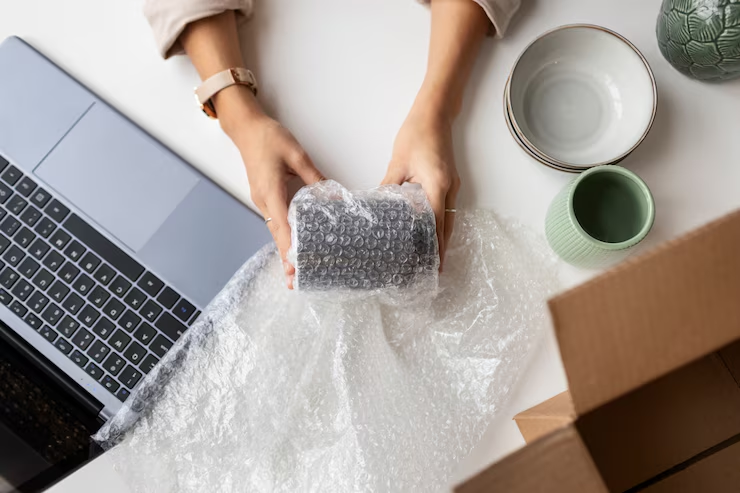
Bubble wrap remains one of the most effective internal packaging materials for fragile goods. The air-filled pockets provide a cushioning effect that absorbs impact. It is especially useful for wrapping individual items before placing them into a box.
Foam inserts offer custom-moulded protection. This is commonly used for electronics, instruments, or luxury goods. Foam cradles each item snugly, reducing movement and absorbing shocks during transit.
Packing peanuts are another cushioning option, often used to fill the voids around an item in a box. While not ideal for precision packaging, they help prevent items from shifting and are lightweight, keeping shipping costs down.
Inflatable air pillows are increasingly popular due to their cost-efficiency and recyclability. They offer padding and fill gaps in packages, ensuring minimal movement inside the box.
Fragile labels and handling instructions on the outer packaging are also essential. While they don’t provide physical protection, they prompt handlers to exercise extra care.
Materials Suited for Bulk Shipments
Bulk items require materials that can withstand pressure, stacking, and extended periods of handling. These often involve pallets, crates, and heavy-duty wraps.
Wooden crates are strong, reusable containers that are perfect for exporting bulk machinery, tools, or commercial products. They offer superior protection and are accepted globally for freight transport.
Pallets, usually made of wood or plastic, allow heavy shipments to be moved efficiently using forklifts. They are essential for stacking and stabilising bulk loads and are often combined with stretch film or shrink wrap for added security.
Corrugated fibreboard sheets can be layered between items or wrapped around large goods. They serve to separate, support, and protect items from abrasion or pressure during stacking.
Stretch film wraps around bulk loads to stabilise and secure them during movement. It also protects against dust, moisture, and tampering. Shrink wrap, which requires heat application, forms a tight seal over bulk loads for added security and resistance.
Strapping materials like plastic or steel bands are used to tightly bind items on a pallet. They prevent movement and provide a level of compression, ensuring that the goods stay in place during shipment.
Edge protectors, often made of cardboard or plastic, are used along the edges and corners of boxes or pallets. These prevent crushing or tearing when other items are stacked on top.
Eco-Friendly Options for Sustainable Packaging
Sustainability is becoming a priority for many businesses and consumers. Biodegradable packing peanuts, paper-based bubble wrap alternatives, and corrugated cardboard made from recycled materials are increasingly available. These offer similar protection while reducing environmental impact.
Corrugated paper rolls, which can be used to wrap items or fill voids, are a good substitute for plastic-based cushioning. Similarly, moulded pulp inserts, made from recycled paper fibres, provide structure and support for fragile items and are fully compostable.
Packaging for International Shipping
Shipping overseas requires attention to detail in both material strength and regulatory compliance. Many countries require that wooden pallets and crates be treated to prevent the spread of pests. This is usually indicated with an ISPM 15 stamp. Furthermore, labels must be accurate and include international shipping symbols to ensure clear communication.
Because international shipping involves multiple transit points and longer durations, water-resistant materials are essential. Laminated boxes, plastic wraps, and waterproof adhesives help maintain package integrity despite changing weather conditions.
Cost Considerations and Efficiency
Packaging costs can add up quickly, particularly when dealing with high volumes or oversized items. However, choosing cheaper, lower-quality materials can lead to higher replacement costs and damage claims.
One way to control costs without compromising safety is through custom packaging. By tailoring the packaging to the product’s dimensions and fragility, companies can reduce material waste, lower weight, and minimise the risk of damage. Automated packaging systems are also gaining popularity for businesses handling large volumes, offering precision and efficiency.
The Role of Professional Packaging Services
Many businesses now outsource packaging to professionals, especially when dealing with high-value or complex shipments. Packaging specialists can recommend the right combination of materials and design a system tailored to the goods, transport method, and destination. This not only enhances protection but often improves branding through customised packaging solutions.
Conclusion
The right packaging materials for shipping fragile and bulk items can make a significant difference in the safety, efficiency, and professionalism of a delivery. Whether cushioning a delicate object or securing a pallet of goods, every layer of packaging plays a role in protecting the contents. By investing in the right materials, adopting sustainable practices, and staying informed on regulations, businesses can ensure that their products arrive safely and reflect positively on their brand.